The Genomic Architecture of Survival: Contrasting Evolutionary Paths in Endangered Island Oaks
Genetic diversity underpins evolutionary resilience. As populations decline, endangered species typically suffer from eroding genetic diversity, increased inbreeding, and accumulating genetic load. Yet some small population endangered species maintain high genetic diversity and low inbreeding depression. The mechanisms behind this paradox remain unclear. Moreover, most conservation genetic research focuses on animals, leaving plants, especially endangered species, severely underrepresented.
The genus Quercus (oaks) dominates many temperate and subtropical forests in the Northern Hemisphere. About 31% of oak species are threatened, yet research remains heavily biased toward North America and Europe. East and Southeast Asia, home to the most threatened oaks, are poorly studied. Among endangered oaks, some show severely reduced genetic diversity while others maintain high diversity under similar constraints. The mechanisms underlying this contrast have not been elucidated. This gap hinders a deeper understanding of evolutionary processes shaping genetic resilience in threatened oaks.
Recently, a research team led by Prof. Baosheng Wang at the South China Botanical Garden (Chinese Academy of Sciences, CAS), conducted a conservation genomics study on two critically endangered island oaks—Quercus bawanglingensis and Quercus pseudosetulosa. The team assembled high-quality chromosome-level genomes and revealed how natural selection and demographic history have shaped their markedly different genomic architectures. Both species survive as single isolated populations with very few adult individuals. Q. bawanglingensis is restricted to the karst landscape of Exian Mountain on Hainan Island, while Q. pseudosetulosa survives only on weathered red soils of Dawanshan Island. Despite their similar status, their genomic diversity differs dramatically.Q. pseudosetulosa displayed reduced genetic diversity due to a prolonged population decline, while Q. bawanglingensis maintained high diversity, attributed to a larger historical effective population size (Ne) along with its high outcrossing and longevity. Despite its small Ne, Q. pseudosetulosa exhibited minimal genetic load, suggesting efficient purging of deleterious mutations. Population genomic analyses revealed that the two species harbor different selected genes and exhibit distinct sweep dynamics, reflecting their unique genetic backgrounds and habitat distributions. The study provides important scientific evidence for understanding the evolutionary dynamics of small populations and for formulating more effective conservation strategies.
The research was published onThe Plant Journaltitled "Demographic history and natural selection regimes shape divergent genomic architectures in two endangered island oaks", Prof. WANG Baosheng is the corresponding author and Dr. LUO Wenji is the first author, both from the South China Botanical Garden. Dr. TU Tieyao from the South China Botanical Garden and Dr. Alison Kim Shan Wee from the University of Nottingham Malaysia contributed to this work.Article link: DOI: 10.1111/tpj.70953.
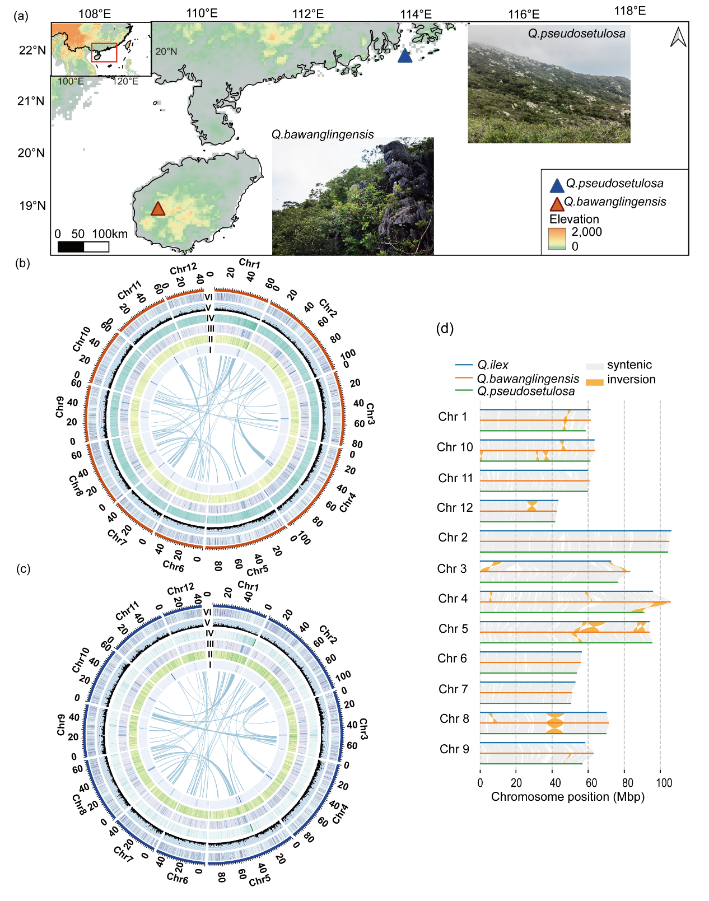
Figure 1. Geographic distribution, genomic characteristics, and genomic collinearity of Q. bawanglingensis and Q. pseudosetulosa.(Image by WANG Faming)
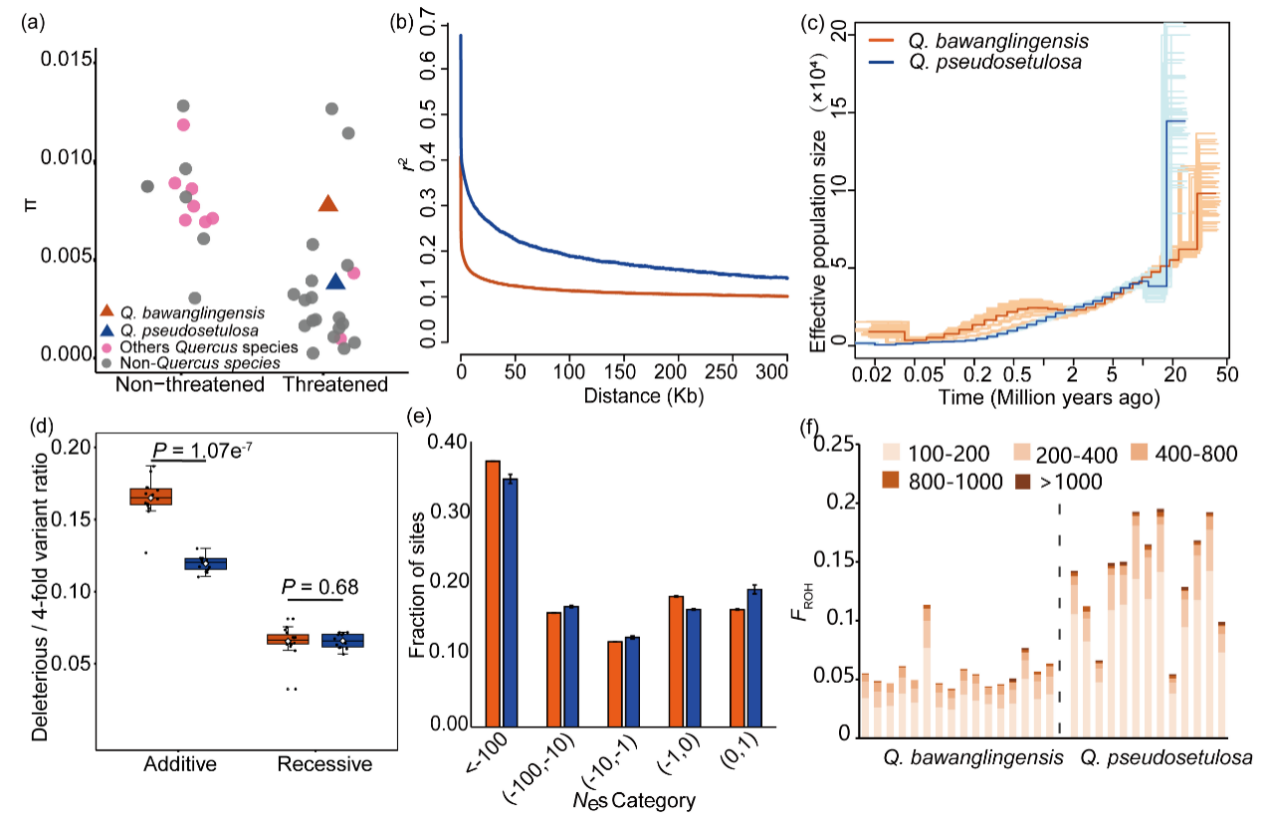
Figure 2. Genetic and demographic parameters of Q. bawanglingensis and Q. pseudosetulosa.(Image by WANG Faming)
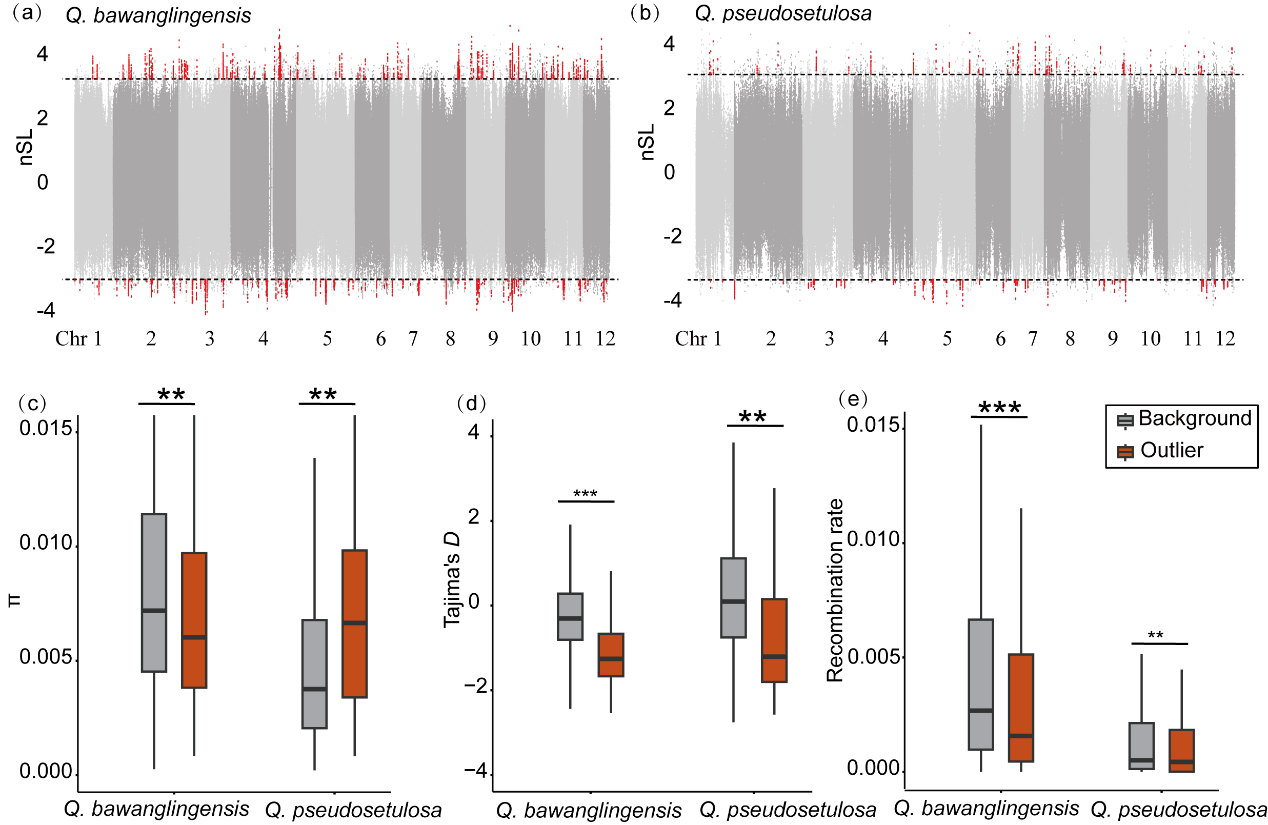
Figure 3. Genomic signatures of selective sweep in Q. bawanglingensis and Q. pseudosetulosa.(Image by WANG Faming)
File Download: