South China Botanical Garden (SCBG) of the Chinese Academy of Sciences (CAS) is one of China’s oldest botanical research institutions. Founded on December 4, 1929 by the distinguished botanist, Academician CHUN Woon-young, it was originally known as the Institute of Agriculture and Forestry (IAF) of Sun Yat-sen University. On June 3, 1954, the institute was placed under the administration of CAS and renamed the South China Institute of Botany (SCIB). In 1956, SCIB established its botanical garden (established December 2) as well as China’s first national nature reserve—the Dinghushan National Nature Reserve (established June 30). On October 16, 2003, it adopted its present name, South China Botanical Garden, CAS. On May 30, 2022, the State Council of the People’s Republic of China approved the establishment of South China National Botanical Garden (SCNBG) in Guangzhou, Guangdong Province, which will be co-constructed by the National Forestry and Grassland Administration, the Ministry of Housing and Urban-Rural Development, the Chinese Academy of Sciences, Guangdong Provincial People’s Government, and Guangzhou Municipal People’s Government. On July 11 of the same year, SCNBG was officially inaugurated.
As one of China’s largest comprehensive botanical gardens and premier institutions for plant germplasm conservation, SCBG comprises three major sections:
1. Display Zone
Covering 282.5 hectares in Guangzhou, Guangdong Province, this zone is dedicated primarily to plant ex situ conservation and public education, and is designated as a National AAAA Tourist Attraction. It is home to approximately 19,766 plant taxa cultivated across 39 theme gardens, including the Magnolia Garden, Ginger Garden, and Orchid Garden. The Longdong Qilin Scenic Area and the complex of conservatories stand as its most iconic landscapes.
2. Research Zone
Encompassing 36.8 hectares, located just next to the display zone in Guangzhou, this zone hosts four research centers: the Plant Science Center, the Ecological and Environmental Science Research Center, the Agricultural Biotechnology Research Center, and the Horticulture Research Center. Supporting scientific research at SCBG and collaborating institutions worldwide are a herbarium (IBSC) housing more than 1.3 million plant specimens, a library, editorial offices for the Journal of Tropical and Subtropical Botany (Chinese) and Biological diversity (English), an information center, and an institutional core facility platform for shared technologies and equipment.
3. Dinghushan National Nature Reserve (DNNR)
Spanning 1,155 hectares in Zhaoqing, Guangdong Province, DNNR is China’s first national nature reserve and the only one affiliated with CAS. To date, more than 1,948 wild plant species are preserved here through in situ conservation.
Meanwhile, SCBG also hosts several international and regional organizations, including the Botanic Gardens Conservation International (BGCI) China Programme Office, the World Magnolia Center, the Botanical Society of Guangdong Province, the Plant Physiology Society of Guangdong Province, and the Ecological Society of Guangdong Province.It aims to become a member of the Global Partnership for Plant Conservation (GPPC) by 2025.
Since its affiliation with CAS in 1954, SCBG has made remarkable scientific research achievements (by the end of 2025). These achievements include: publishing more than 540 monographs, such as Flora of China, The Vegetation of Guangdong, Studies on the Tropical and Subtropical Degraded Ecosystem and Its Rehabilitation, Rare Plants of China, and Introduction to Restoration Ecology; issuing over 6,900 SCI papers, including those published in top-tier international journals such as Nature and Science; securing more than 630 authorized patents; and registering over 410 new plant varieties granted or officially recognized since 1988.
Building on these research accomplishments, SCBG has received more than 340 awards at all levels, including First Class prizes in the State Natural Science Award and the State Technological Invention Award, as well as being recognized in China’s Top Ten Basic Research News in 2000 and 2006 respectively.
Talent has underpinned SCBG’s remarkable achievements. As of the end of 2025, SCBG employs 386 staff members (including 67 professors and 93 associate professors) and 126 postdoctoral researchers. Among its talent pool are 8 recipients of the National Science Fund for Distinguished Young Scholars and the National Outstanding Youth Science Fund (including overseas scholars), plus 9 distinguished members of the Youth Innovation Promotion Association of CAS.
By the end of 2025, SCBG had cultivated a total of approximately 1,000 doctoral students and around 2,000 master's students, with 451 graduate students currently enrolled (298 master's candidates and 153 doctoral candidates). Each year, a large number of its students win numerous awards and honors, among which 2 dissertations have been recognized as National Excellent Doctoral Dissertations and 7 as Excellent Doctoral Dissertations of CAS.
In 1997, SCBG established China’s first science popularization education base—the Guangdong Botany Science Popularization Base—in collaboration with the Guangdong Association for Science and Technology. It has been honored with 40 national and provincial science popularization accreditations, including the National Science Popularization Education Base, National Scientist Spirit Education Base, National Practice Education Base for Primary and Secondary School Students, National Science Popularization Base for Scientific Research Institutions, and National Forestry and Grassland Science Popularization Base. In 2002, SCBG completed the Pugang Natural Education Trail, the first of its kind in mainland China.
In addition, SCBG offers a wide variety of year-round educational programs and public events, such as the Qilin Science Forum and seasonal flower exhibitions. The Dinghushan National Nature Reserve has built the “Seeing Dinghushan” Education Museum and natural education trails, and developed exploratory nature education programs including “Primeval Forest” and “Young Citizen Scientist”.
During the 14th Five-Year Plan period (2021–2025), the display area of SCBG and the Dinghushan National Nature Reserve & Arboretum received an annual average of more than 3.99 million visitors. SCBG has been recognized as a National Advanced Collective for Science Popularization, an Outstanding Organization of the National Science Popularization Day, and an Excellent Institution for Science Communication by CAS. It was also twice named China’s Outstanding Botanical Garden, in 2019 and 2022 respectively.
The mission of SCBG in 2026-2030 (15thFive-Year Plan Period, pending approval): Committed to plant conservation, scientific research and knowledge dissemination in tropical and subtropical regions across the globe, SCBG aims to become an irreplaceable core national research institution in such fields as botany, ecology, agricultural science, horticultural science, and key technologies for the conservation and utilization of plant resources. It will lead and drive the development of the national botanical garden system in China and the advancement of botanical gardens worldwide, and build SCNBG with Chinese characteristics, world-class standards and harmonious coexistence of all living things.
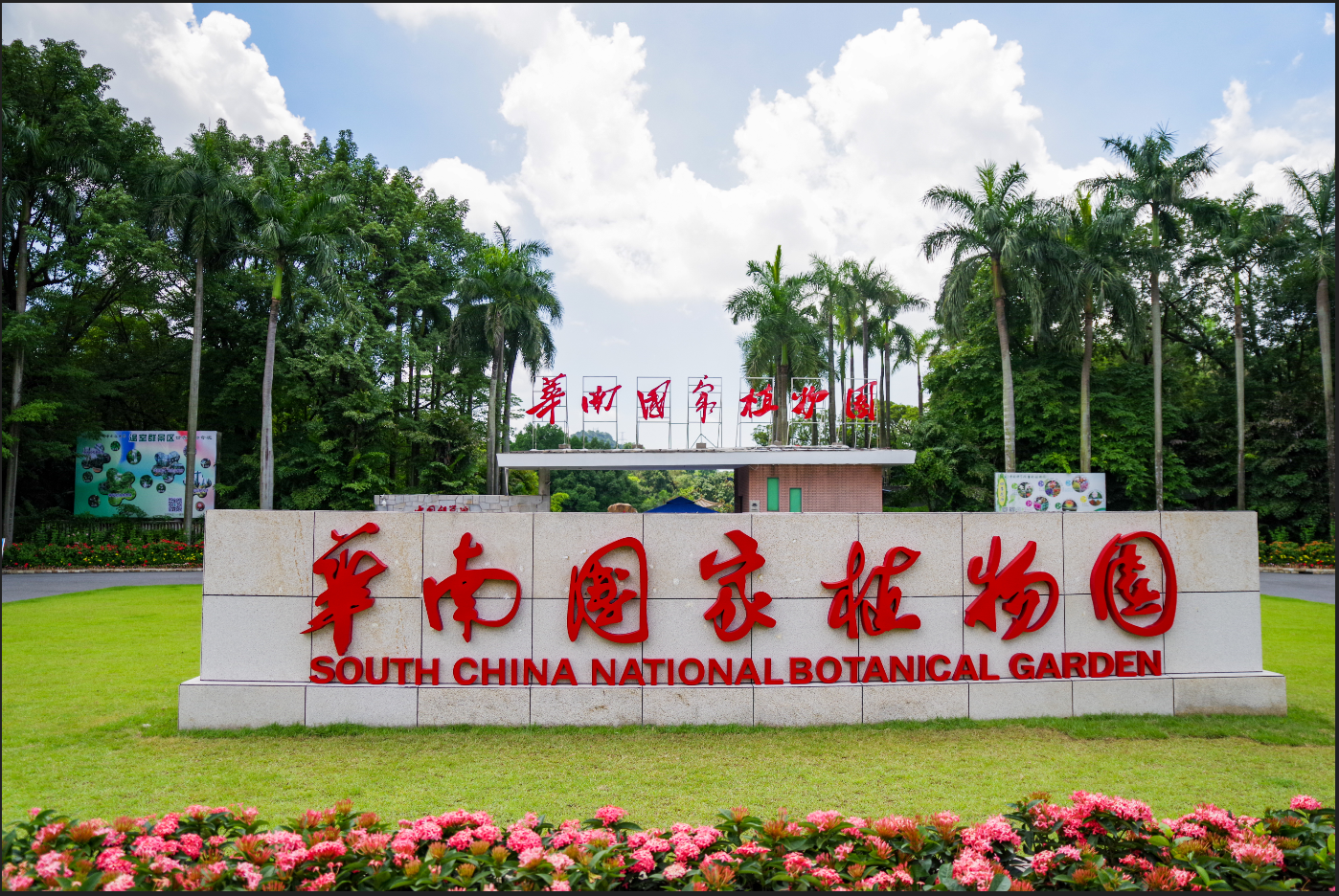
Main Entrance of SCBG
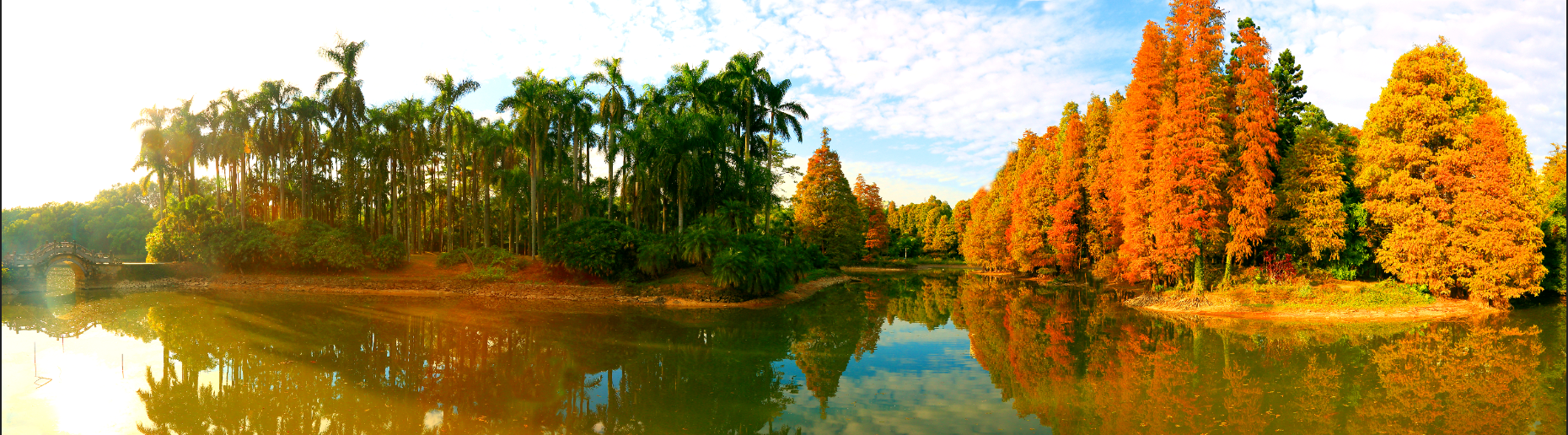
Longdong Qilin
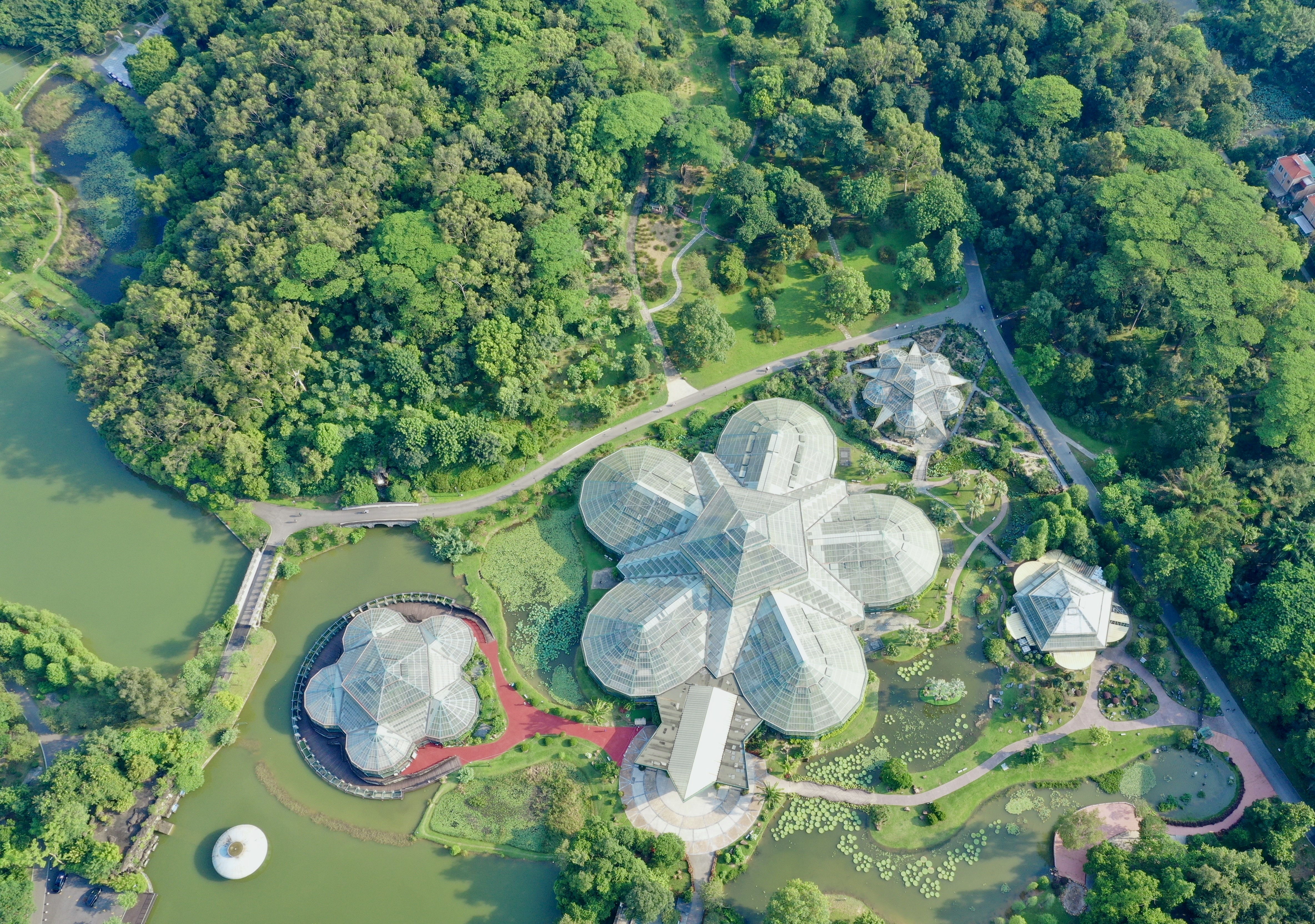
Birdview of the Greenhouses
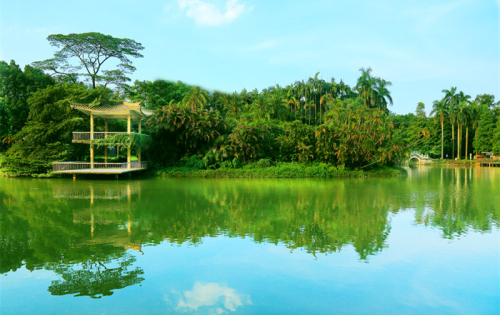
Lake and Yiran Pavilion
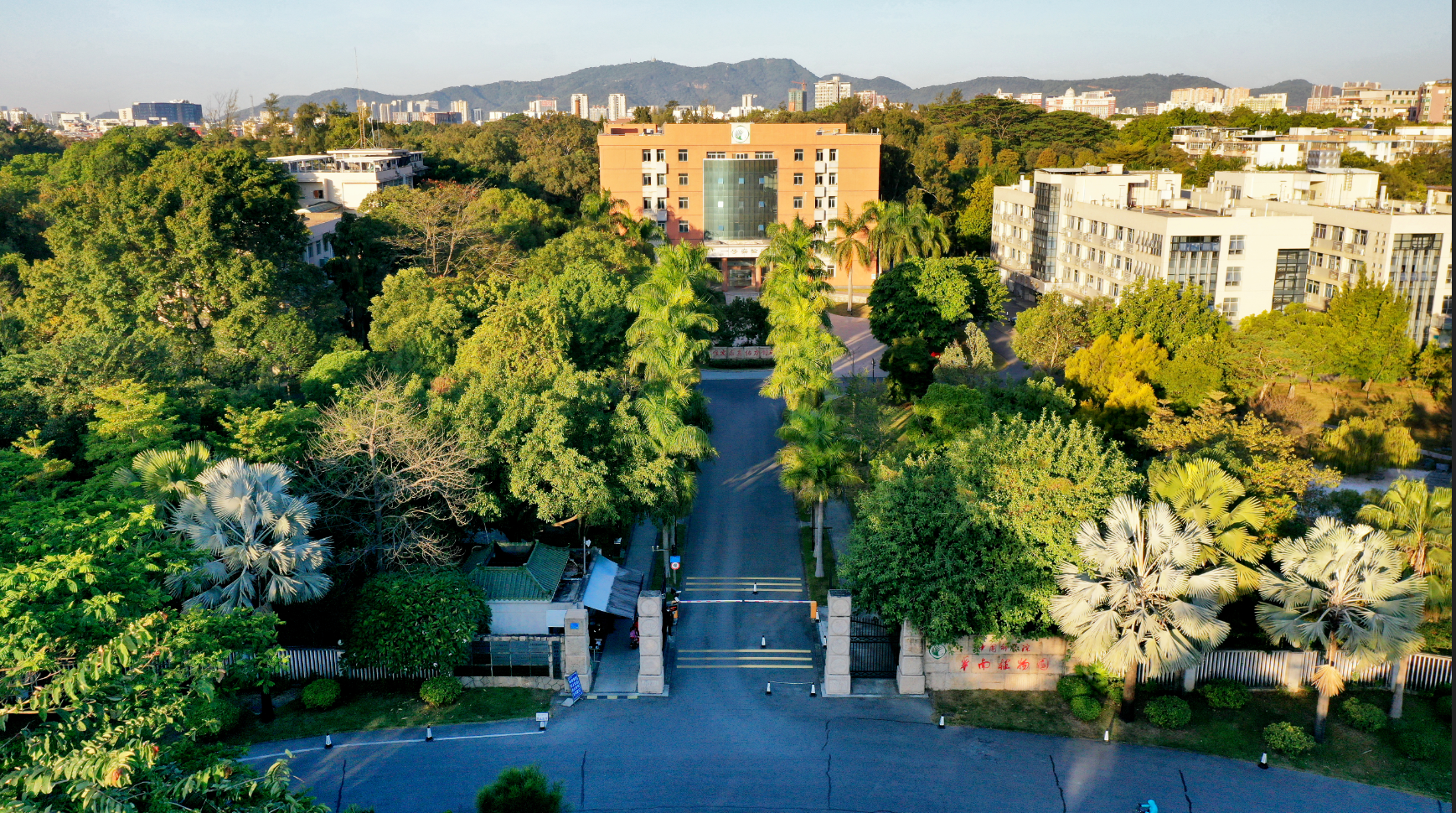
The Research Zones
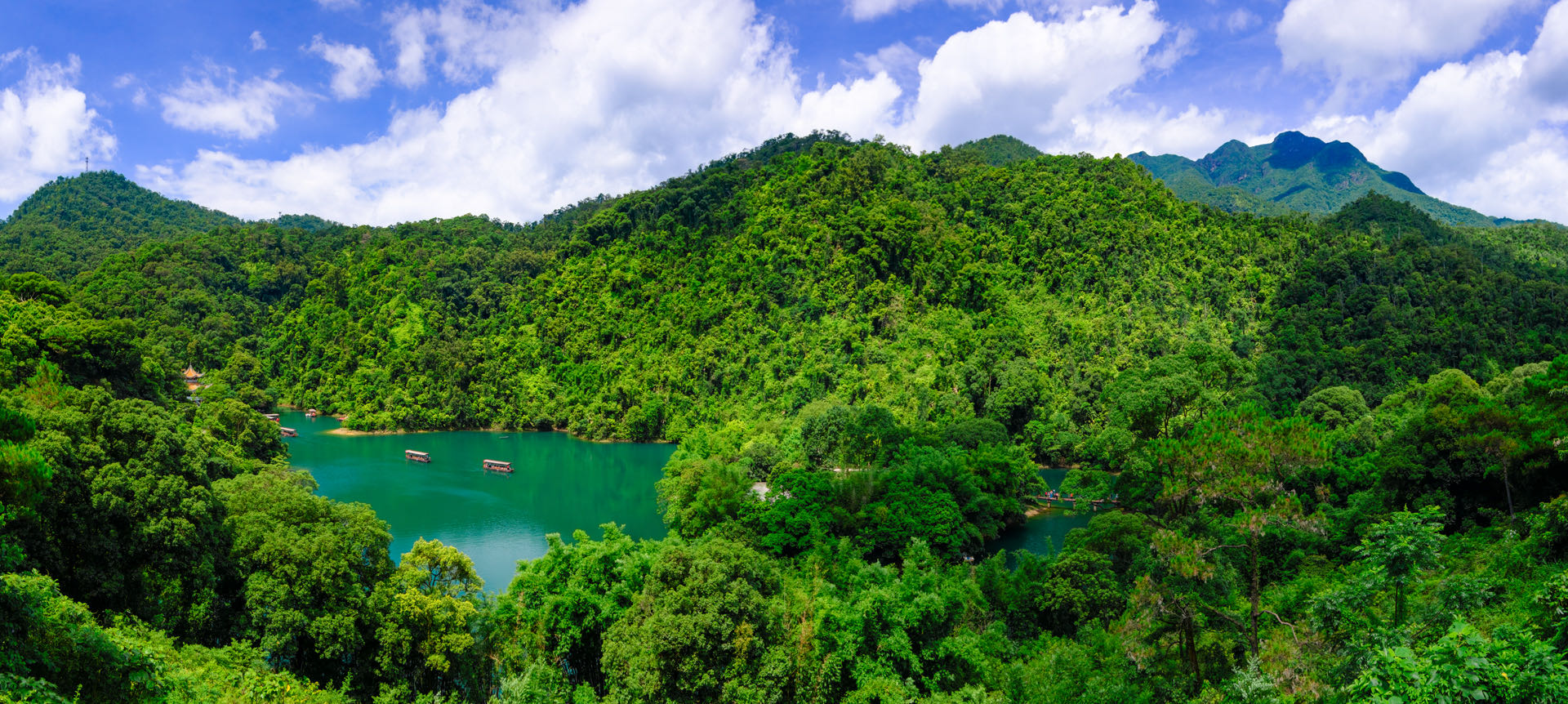
Dinghushan National Natural Reserve
File Download: